
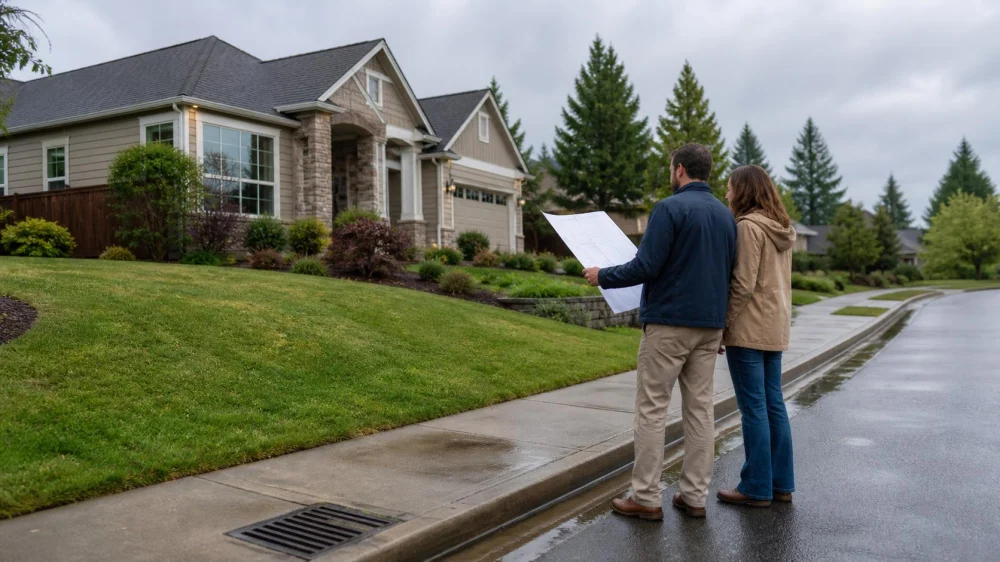
Flood Zone Maps: What Home Buyers Should Verify
On this page
Quick answer
A flood-zone label is only one part of a buyer’s risk review. Confirm the parcel and map version, ask about prior water events and drainage, obtain property-specific insurance information, and inspect the site with qualified professionals. Keep financing, insurance, inspection, and contingency deadlines visible before making an offer or waiving protection.

Prism at Park Avenue South Apartments / prism at park avenue south apartments
New YorkNew York CountyNew York
50 E 28th St, New York, NY 10016, USA
Understand what a flood map can and cannot show
A regulatory flood map classifies areas using modeled flood hazards and is commonly used for planning and insurance requirements. It does not predict whether a specific home will flood during your ownership, and it may not capture every source of water, recent construction, drainage failure, coastal change, wildfire-related runoff, or conditions smaller than the map scale.
This guide is for U.S. home buyers comparing properties before an offer or during due diligence. It is not a flood determination, engineering report, insurance quote, appraisal, or legal opinion. Local rules, lender requirements, map revisions, disclosures, and contract rights vary, so use current property-specific information and qualified local professionals.

90W Luxury Apartments / 90w nyc
New YorkNew York CountyNew York
90 Washington St, New York, NY 10006, USA
Practical checklist
- Match the exact parcel and building location rather than relying only on a listing pin or neighborhood label.
- Record the map panel, effective date, flood-zone designation, and whether a preliminary or pending revision exists.
- Ask the seller for available flood, drainage, water-intrusion, claim, repair, permit, and elevation information required or permitted by local law.
- Walk the exterior with an inspector and note grading, downspouts, drains, retaining walls, nearby channels, low points, and signs of past moisture.
- Obtain a current insurance quote using the property address and building details; ask what the premium, deductible, limits, waiting period, and exclusions actually cover.
- Confirm the lender’s flood-insurance requirement and whether it could change if a map, loan, or property condition changes.
- Review emergency access, utility locations, evacuation guidance, and practical mitigation without assuming any upgrade eliminates risk.
Step-by-step plan
- Open an authoritative current map source and verify the street address against parcel boundaries and the building footprint.
- Compare the map with local planning, stormwater, coastal, wildfire, or watershed information relevant to the property.
- Request available disclosures and supporting records, then distinguish documented events from estimates or seller recollection.
- Ask the inspector whether a specialist, surveyor, engineer, drainage contractor, or elevation documentation is warranted.
- Get insurance terms in writing early enough to evaluate affordability and satisfy financing or contingency dates.
- Summarize remaining uncertainty, possible mitigation, ongoing maintenance, total carrying cost, and exit options before committing.
Create a dated property file containing map screenshots or panel references, parcel confirmation, disclosures, inspection findings, specialist reports, insurance quotes, lender messages, repair documents, and contract deadlines. Label preliminary information clearly and recheck material facts before closing.
Limits and important notes
Mapped zones can change and flooding can occur outside high-risk areas. A lower-risk designation does not mean no risk, while a high-risk designation does not describe the condition or elevation of every building within it. Never infer insurability, premium, structural safety, or future resale value from a map color alone.
Seek property-specific professional review when records show prior flooding, repeated drainage work, foundation or moisture damage, a structure close to a mapped boundary, conflicting parcel data, recent land alteration, or missing elevation information. Consult the lender, insurer, agent, attorney, and appropriate technical specialist before waiving a contingency that protects the decision.
Frequently asked questions
Does a home outside a high-risk zone need flood insurance?
A lender may not require it, but flooding can occur outside mapped high-risk areas. Ask an insurer about available coverage and price based on the property and your risk tolerance.
Can a seller’s current premium predict mine?
Not reliably. Rating inputs, coverage, deductible, owner profile, building details, and program rules can differ. Obtain your own current written quote.
What is an elevation certificate used for?
It documents certain building and elevation information that may support floodplain management or insurance decisions. Ask the insurer, surveyor, or local authority whether one is available or useful.
Should I trust a real-estate listing’s flood label?
Treat it as a prompt to investigate, not a final determination. Verify the parcel and current source, then confirm insurance and lender implications directly.
What if two flood-risk sources disagree?
Check their dates, methods, scale, and purpose. Use the regulatory source for official designation questions and qualified local experts for property-specific physical risk.
Sources and evidence
Start with the current FEMA Flood Map Service Center and relevant state or local floodplain, stormwater, coastal, watershed, and emergency-management sources. Pair them with the exact purchase contract, seller-provided records, an independent inspection, and written information from the buyer’s lender and insurer. Maps and policies change, so record access dates.
Conclusion and next steps
Treat the map as the beginning of due diligence: verify the parcel, inspect the site, review history, price insurance, and protect deadlines. Compare the remaining risk and ownership cost with your budget and alternatives. If a material question remains unresolved, extend the investigation or step back before waiving contractual protection.




 Ayzik Nasimov Real Estate Associate Broker0.0 (0 reviews)
 Flight of Fancy Realty Cooperative4.0 (16 reviews)
 ABJ Properties3.0 (81 reviews)
 Velsor Realty3.0 (3 reviews)
 Howl NYC5.0 (48 reviews)
 Virtuoso Realty Group5.0 (10 reviews)
 How to Make a Competitive Offer on a Home Successfully
 Understanding Short Sales and Foreclosures
 How to Save for a Down Payment on a Home: Smart Strategies
 How to Understand Home Inspection Reports – Complete Guide for Buyers
 How to Save Money on Home Purchases and Closings
 Home Inspection Reports: Turn Findings Into Decisions