

How Buyers Should Use Price per Square Foot
On this page
Quick answer
Price per square foot divides a home's asking price by its listed living area. It helps buyers compare similar homes in the same local market, but it can mislead when homes differ in location, condition, lot size, layout, age, finishes, HOA costs, or measured square footage. Use it as a screening tool, not a final value judgment.
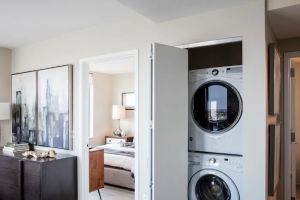
Avalon Brooklyn Bay / avalon brooklyn bay
1501 Voorhies Ave, Brooklyn, NY 11235, USA
What price per square foot means
Price per square foot is a simple real estate metric that compares price with reported living area. If two homes are very similar, it can help buyers spot whether one listing is priced higher or lower than nearby alternatives.
The number is easy to calculate, which is why it appears in many listing discussions. But easy does not mean complete. A home is not only a bundle of square feet. Location, floor plan, natural light, renovations, storage, parking, outdoor space, school zones, commute, and maintenance needs all affect how buyers perceive value.
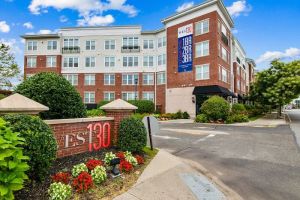
West 130 / 130 west hempstead apartments
West HempsteadNassau CountyNew York
130 Hempstead Ave, West Hempstead, NY 11552, USA
When it is useful
Price per square foot is best for comparing properties that are close substitutes. It works better when homes are in the same neighborhood, have similar property type, age, size range, condition, lot characteristics, and amenities.
For example, it may help compare two similar condos in the same building or two nearby townhomes with similar layouts. In that narrow setting, a large gap can prompt useful questions about upgrades, views, fees, parking, or seller expectations.
It can also help buyers organize a shortlist. If one home is priced far above similar listings, ask what explains the premium. If another is far below, ask whether condition, location, financing, or disclosure issues are part of the story.
Where it can mislead buyers
Price per square foot is not ideal for comparing very different homes. A small renovated home in a prime location may have a higher price per square foot than a larger home farther away. That does not automatically mean it is overpriced.
The metric can also hide layout problems. A larger home with awkward rooms may feel less usable than a smaller home with a better plan. Finished basements, additions, garages, accessory spaces, and local measurement rules can also affect how square footage appears in listings.
Condition matters too. A lower price per square foot may not be a bargain if the home needs major repairs, has outdated systems, or carries higher ownership costs.
How to compare listings
Use a small, consistent comparison set. Choose three to six similar homes that recently sold or are actively listed in the same area. Then compare price per square foot alongside the details that make each property different.
- Compare the same property type, such as condo to condo or single-family home to single-family home.
- Stay within the same local area when possible.
- Check bedroom count, bathroom count, layout, parking, lot size, and HOA fees.
- Review condition, updates, age of major systems, and inspection strategy.
- Ask whether the listed square footage is measured consistently.
- Discuss comparable sales with a qualified local real estate professional.
Buyer checklist
Before relying on price per square foot, ask:
- Are the homes truly similar?
- Is the location comparable street by street?
- Does one home have better layout or usable space?
- Are renovations, repairs, or system ages materially different?
- Do HOA fees, taxes, insurance, or maintenance costs change the picture?
- Could square footage be reported differently across listings?
Important notes and limits
This article is general real estate education for US buyers. It is not appraisal, legal, mortgage, tax, inspection, or investment advice. Real estate values depend on local market data and property-specific details. Buyers should work with qualified local professionals before making an offer or waiving protections.
Evidence notes: price per square foot is widely used as a quick real estate comparison metric, but professional valuation relies on comparable sales, property condition, location, market timing, and many adjustments. Treat the metric as a question generator rather than a final answer.
FAQ
Is a lower price per square foot always a better deal?
No. It may reflect larger size, weaker location, repair needs, awkward layout, higher fees, or lower demand. Compare the full property, not only the ratio.
Why do smaller homes often have higher price per square foot?
Smaller homes can have higher ratios because land, location, kitchens, bathrooms, and fixed construction costs do not scale evenly with size.
Should I use price per square foot to make an offer?
Use it as one input. Offer strategy should also consider comparable sales, property condition, competition, financing, contingencies, and local negotiation norms.
Can square footage be wrong?
It can vary by source, measurement method, and local rules. If square footage is important to your decision, ask how it was measured and consider appropriate professional verification.
Next steps
When comparing homes, calculate price per square foot only after narrowing the list to similar properties. Then use differences in the number to guide questions about condition, layout, location, fees, and recent comparable sales.




 Loden4.0 (80 reviews)
 Perry Associates NYC Inc.4.0 (11 reviews)
 MADEHOME4.0 (206 reviews)
 Family Homes Realty Group4.0 (17 reviews)
 Banana Equities4.0 (48 reviews)
 The Bracha Group5.0 (32 reviews)
 Understanding the Importance of Neighborhood Demographics in Real Estate Decisions
 The Impact of Delivery Drones on Airspace and Privacy in Future Cities
 Tips for Selling High-End Properties Quickly
 How to Find a Real Estate Agent for a Co-op Apartment Purchase
 Tips for Renovating Homes to Increase Rental Income
 How to Research Neighborhood Amenities Before Buying a Property