
- Understanding the rise of aerial delivery systems in modern cities
- How drones are reshaping urban airspace management
- Privacy challenges emerging from constant aerial monitoring
- Real-world deployment cases and public reactions in US cities
- Regulatory frameworks and FAA oversight evolution
- Security risks, surveillance debates, and data concerns
- Smart city integration and real estate implications
- How Luxen House Realty Hub connects lifestyle, property, and future tech trends
Understanding the rise of aerial delivery systems in modern cities
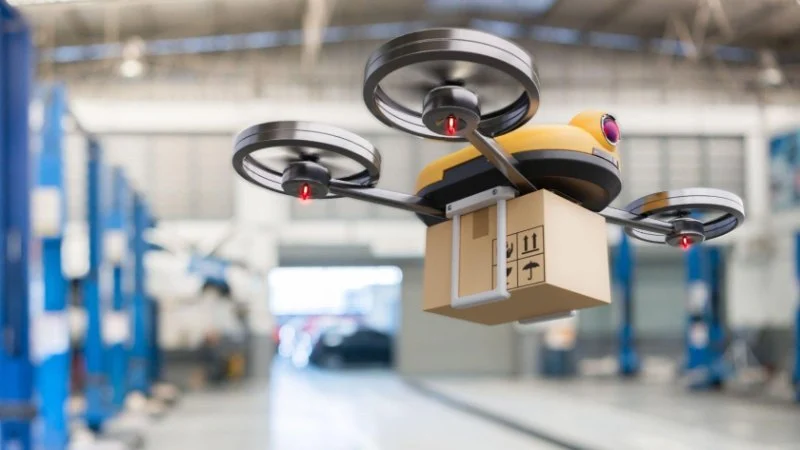
The idea of delivery drones once felt like a futuristic novelty—something closer to science fiction than everyday logistics. Yet in the United States today, companies are actively testing and expanding drone delivery networks in suburban neighborhoods, university campuses, and even select urban zones. The shift is not just about convenience; it represents a fundamental restructuring of how goods move through space.
The core motivation behind delivery drones is efficiency. Traditional delivery trucks contribute to traffic congestion, emissions, and rising labor costs. Drones, by contrast, bypass road infrastructure entirely, moving directly through controlled air corridors. This creates a parallel logistics layer above the city—quiet, fast, and increasingly automated.
However, this transformation raises a critical question: when the sky above residential neighborhoods becomes a delivery highway, how does that change daily life, safety expectations, and even the concept of personal space?

Prism at Park Avenue South Apartments / prism at park avenue south apartments
New YorkNew York CountyNew York
50 E 28th St, New York, NY 10016, USA
Why drone delivery is expanding faster than expected
Several technological improvements have accelerated adoption. Battery efficiency, lightweight materials, and AI-powered navigation systems now allow drones to fly longer distances with higher precision. In parallel, machine learning models have significantly improved obstacle detection, enabling drones to avoid trees, buildings, and even moving objects like birds.
Retail giants and logistics startups see drones as a way to solve the “last mile problem”—the most expensive and time-consuming part of delivery. Instead of a driver navigating traffic, a drone can deliver a package in minutes, especially in suburban layouts.
West 130 / 130 west hempstead apartments
West HempsteadNassau CountyNew York
130 Hempstead Ave, West Hempstead, NY 11552, USA
How drones are reshaping urban airspace management
One of the most overlooked consequences of delivery drones is the transformation of airspace itself. Historically, low-altitude airspace was relatively uncluttered, reserved for helicopters, emergency services, and recreational aircraft. With drones entering the equation, this once-simple layer of the sky is becoming densely regulated and actively managed.
The emergence of low-altitude traffic corridors
Urban planners and aviation authorities are now experimenting with designated drone corridors—virtual highways in the sky. These corridors aim to separate drone traffic from manned aircraft while also preventing chaotic overlaps between different drone operators.
In practice, this means cities may eventually have “aerial zoning maps,” similar to how roads are structured on the ground. Residential areas might have restricted flight altitudes, while commercial corridors could allow higher drone traffic density.
Airspace congestion and coordination challenges
As drone usage scales, airspace congestion becomes a real concern. Unlike cars, drones operate in three dimensions, which exponentially increases routing complexity. Without strict coordination systems, mid-air conflicts or signal interference could become more common.
This has led to the development of unmanned traffic management systems that function similarly to air traffic control—but for thousands of small autonomous devices simultaneously.
Privacy challenges emerging from constant aerial monitoring
Perhaps the most emotionally charged issue surrounding delivery drones is privacy. Unlike traditional delivery vehicles that stay on streets, drones often fly directly over private property. This introduces an unprecedented level of aerial visibility into residential spaces.
The invisible camera problem
Many modern delivery drones are equipped with cameras and sensors for navigation and safety. While their primary function is obstacle detection, the presence of recording devices raises concerns about incidental data collection.
Homeowners often worry that drones flying overhead may capture images of backyards, windows, or private gatherings. Even if companies claim strict data policies, the perception of being watched from above creates discomfort and skepticism.
Behavioral impact on residents
In some pilot neighborhoods, residents reported subtle changes in behavior once drone delivery systems became active. People began closing blinds more frequently or reconsidering outdoor privacy setups. This phenomenon highlights a psychological shift—privacy is no longer just about ground-level visibility, but also aerial exposure.
The challenge is not only technical but cultural: society must redefine what constitutes acceptable observation in shared airspace.
Real-world deployment cases and public reactions in US cities
Several US regions have already become testing grounds for delivery drone systems. These early deployments provide valuable insight into both benefits and public concerns.
Suburban pilot programs and convenience gains
In select suburban areas, drone delivery has been tested for groceries, medicine, and small retail items. Residents often appreciate the speed—deliveries that once took hours now arrive in under 30 minutes.
However, even in these positive cases, community feedback often includes questions about noise levels, flight frequency, and long-term environmental impact.
University campuses as controlled environments
University campuses have become ideal testing grounds due to controlled boundaries and predictable demand patterns. Students can order meals or supplies delivered directly to designated drop zones.
These environments help companies refine logistics systems without the complexity of dense urban populations.
Urban skepticism and regulatory caution
In dense cities, public acceptance is more cautious. Concerns about safety, noise pollution, and privacy tend to outweigh enthusiasm. Local governments often impose strict limitations on flight paths and operating hours.
This tension between innovation and regulation continues to shape how quickly drone networks expand.
Regulatory frameworks and FAA oversight evolution
In the United States, the Federal Aviation Administration plays a central role in shaping drone policy. Current regulations require operators to maintain visual line-of-sight in many cases, though exemptions are being tested for commercial delivery systems.
Balancing innovation and safety
Regulators face a complex balancing act: encouraging innovation while ensuring safety in shared airspace. Too much restriction could slow technological progress, while too little oversight could lead to accidents or misuse.
This has led to phased approvals, where companies must demonstrate safety performance before expanding operations.
Data governance and operational transparency
Another emerging regulatory focus is data governance. Authorities are increasingly interested in how drone-collected data is stored, processed, and shared. This directly ties into privacy concerns raised by communities.
Future regulations may require clearer disclosure about onboard sensors and data retention policies.
Security risks, surveillance debates, and data concerns
Beyond privacy, delivery drones introduce cybersecurity and physical security risks. Any connected aerial system is potentially vulnerable to hacking, signal interference, or unauthorized control.
Potential misuse scenarios
Experts have raised concerns about drones being repurposed for surveillance or unauthorized data collection. Even commercial systems could theoretically be exploited if security protocols are weak.
This has led to increased investment in encryption, authentication systems, and fail-safe navigation protocols.
Public perception and trust challenges
Trust remains one of the biggest barriers to widespread adoption. Even if systems are technically safe, public acceptance depends on transparency and consistent regulation.
Communities are more likely to embrace drone delivery when they feel informed and involved in decision-making processes.
Smart city integration and real estate implications
Delivery drones are not just a logistics innovation—they are also influencing urban planning and real estate development. Developers are beginning to consider drone accessibility as part of property value discussions.
Buildings with designated drone landing zones or rooftop delivery pads may become more desirable in future smart cities.
Changing expectations for residential neighborhoods
As drone traffic increases, residential design may evolve. Architects might incorporate privacy-focused landscaping, enclosed outdoor spaces, or drone shielding structures to protect residents from overhead visibility.
This shift could redefine what “privacy-friendly housing” means in urban environments.
How Luxen House Realty Hub connects to future living trends
For buyers, investors, and homeowners trying to understand how emerging technologies affect property value and lifestyle, platforms like Luxen House Realty Hub provide useful insights. As drone delivery becomes more common, real estate decisions will increasingly factor in technology infrastructure, airspace regulations, and neighborhood design compatibility.
Understanding these trends early helps individuals make more informed decisions about where and how they choose to live in a rapidly evolving urban landscape.
Looking ahead at aerial logistics and personal boundaries
The rise of delivery drones represents more than just a shift in transportation—it reflects a broader transformation in how humans share physical and digital space. The sky above our homes is becoming an active, managed environment rather than an empty backdrop.
As technology advances, the key challenge will not only be efficiency or cost, but maintaining a balance between innovation and personal boundaries. The future of airspace will depend as much on social agreement as on engineering capability.






 Mark Ski COMPASS Real Estate5.0 (2 reviews)
 Baring Homes5.0 (1 reviews)
 Bay Club Real Estate4.0 (29 reviews)
 45 Main Street - Two Trees DUMBO Office Space5.0 (2 reviews)
 505 Eighth Ave Corporation4.0 (17 reviews)
 Two Beekman Pl Building5.0 (2 reviews)
 Understanding Seasonal Trends in the Housing Market
 Tips for Buying a Home Near Public Transportation | Budget Breakdown
 The Benefits of Owning vs. Renting a Home: A Comprehensive Guide
 Top 10 Mistakes First-Time Homebuyers Make and How to Avoid Them
 Tips for Buying Property in High-Demand Urban Areas
 Renting vs. Buying: The Pros and Cons You Need to Consider