
Occupied Home Showings: A Privacy and Safety Checklist
On this page
Quick answer
For showings in an occupied home, secure medication, documents, keys, valuables, devices, and personal schedules before visitors arrive. Agree on access rules with the listing agent, control pets, remove identifying displays, and check the property afterward. A clear showing plan protects privacy without hiding material facts buyers are entitled to evaluate.

Prism at Park Avenue South Apartments / prism at park avenue south apartments
New YorkNew York CountyNew York
50 E 28th St, New York, NY 10016, USA
Why it matters
An occupied home showing is a buyer visit while the seller or tenant still lives in the property. Unlike a vacant listing, everyday belongings, account information, medications, family routines, and pet or access risks must be managed alongside presentation and buyer access.
This checklist is for U.S. sellers and occupants coordinating routine showings through a real estate professional. Lease terms, fair-housing duties, notice rules, surveillance laws, disclosure obligations, and brokerage practices vary. It is not a substitute for legal or security advice.

787 Seventh Avenue / 787 seventh avenue new york
New YorkNew York CountyNew York
787 7th Ave, New York, NY 10019, USA
Practical checklist
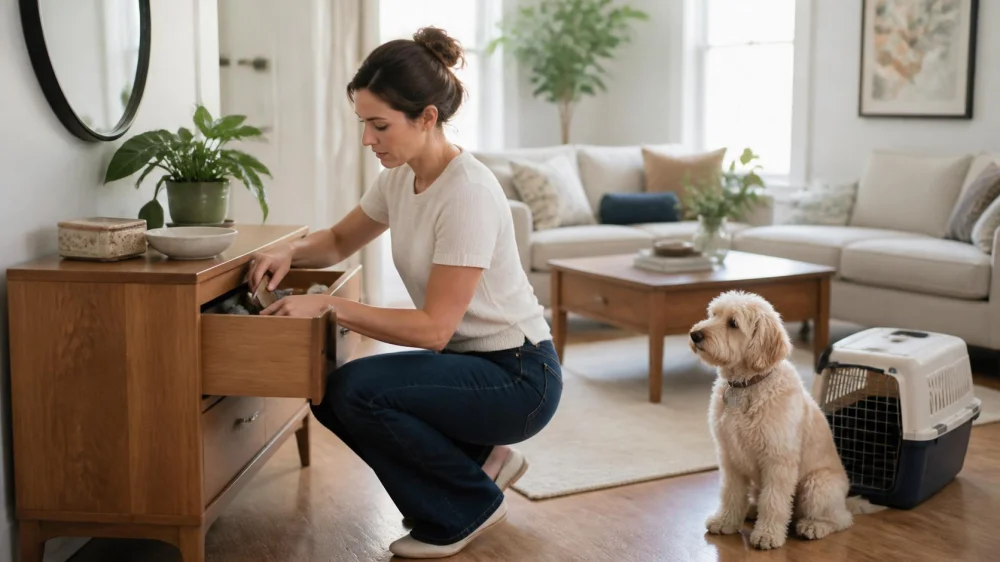
- Store medication, financial papers, mail, identification, spare keys, calendars, and portable valuables out of view.
- Lock computers and tablets, disable smart-display notifications, and hide Wi-Fi credentials or account screens.
- Remove photos, school names, work schedules, travel plans, and other details that reveal identity or routines.
- Set written instructions for notice, approved hours, entry method, agent presence, occupied rooms, and follow-up.
- Secure pets in a suitable location and disclose any relevant access or safety instructions to the listing agent.
- Keep required disclosures and property facts accurate; privacy preparation should not conceal defects or limitations.
- After each visit, check doors, windows, alarms, thermostats, lights, pets, and any item that appears moved.
Step-by-step plan
- Map the showing route. Walk from entrance to exit and note where visitors could encounter private papers, fragile objects, trip hazards, restricted rooms, pets, or security controls.
- Create a secure daily reset. Use a locked drawer, safe, or off-site storage for small sensitive items rather than moving them to an obvious closet whenever a showing is booked.
- Coordinate access with the listing agent. Define how appointments are confirmed, who may enter, how late or early arrivals are handled, and what happens if the home is unexpectedly occupied.
- Prepare people and pets. Arrange a realistic place to go, take essential medication and devices with you, and avoid leaving a pet loose with unfamiliar visitors.
- Reduce digital exposure. Lock screens, pause voice-assistant notifications, protect cameras and network equipment, and avoid displaying codes or personal messages.
- Do a two-minute departure check. Secure private items, clear hazards, close prohibited access points, set appropriate lighting, and follow agreed alarm or lockbox procedures.
- Inspect after the showing. Confirm the property is secure and report access concerns, damage, or missing items promptly through the appropriate agent and service.
Use a minimal showing log with date, appointment window, responsible agent, access confirmation, and any issue. Do not post occupant schedules publicly or leave a detailed routine where visitors can see it.
Limits and warning signs
No preparation can remove every risk, and over-restricting reasonable access can reduce buyer interest or conflict with an agreement. Cameras and audio devices raise legal and privacy questions that vary by jurisdiction; disclose and use them only after obtaining qualified local guidance.
Stop access and contact the listing professional if an unverified person arrives, instructions are bypassed, keys or codes appear compromised, or a safety threat develops. Report suspected theft or immediate danger to the appropriate authorities. Tenants and landlords should resolve notice and entry disputes under the lease and local law.
Frequently asked questions
Should sellers stay during a showing?
Usually buyers need reasonable space to evaluate the home, but the right plan depends on security, occupancy, disability, tenancy, and agent guidance. Agree on the process before appointments begin.
Can I lock one room?
Possibly, but buyers may expect access to spaces included in the property. Discuss any restricted area with the listing professional and ensure it does not hide a material condition.
Are indoor cameras allowed during showings?
Rules for video, audio recording, notice, and consent vary by location. Obtain qualified local guidance and follow brokerage policy before using surveillance.
What belongs in a portable showing kit?
Consider essential medication, identification, device chargers, pet supplies, sensitive work materials, and anything needed during the appointment window.
Sources and evidence
The checklist reflects common real estate access control, privacy hygiene, digital security, pet management, and property reset practices. Contracts, leases, local law, brokerage policy, and qualified local professionals should guide decisions about notice, surveillance, disclosures, and restricted access.
Conclusion and next steps
Build one repeatable routine instead of improvising for every appointment: secure private items, confirm authorized access, relocate safely, and complete a post-showing check. Review the routine with the listing agent and update it after any access problem.






 Loretta Beharry - Queens & Long Island Realtor with eXp Realty5.0 (14 reviews)
 JA Cohen Advisory Group5.0 (1 reviews)
 Cow Harbor Realty5.0 (11 reviews)
 City Stop Realty5.0 (37 reviews)
 RockFarmer Properties5.0 (1 reviews)
 Calabrese Real Estate5.0 (2 reviews)
 Tips for Investing in Real Estate With Limited Capital
 Plan a Productive Weekend of Open Houses
 Verify a Home’s True Utility Costs Before You Buy
 Negotiation Tips for Home Sellers: Getting the Best Deal
 Understanding Property Taxes and How They Affect Buyers
 How to Finance a Home Purchase With Minimal Stress: Expert Tips and Advice