
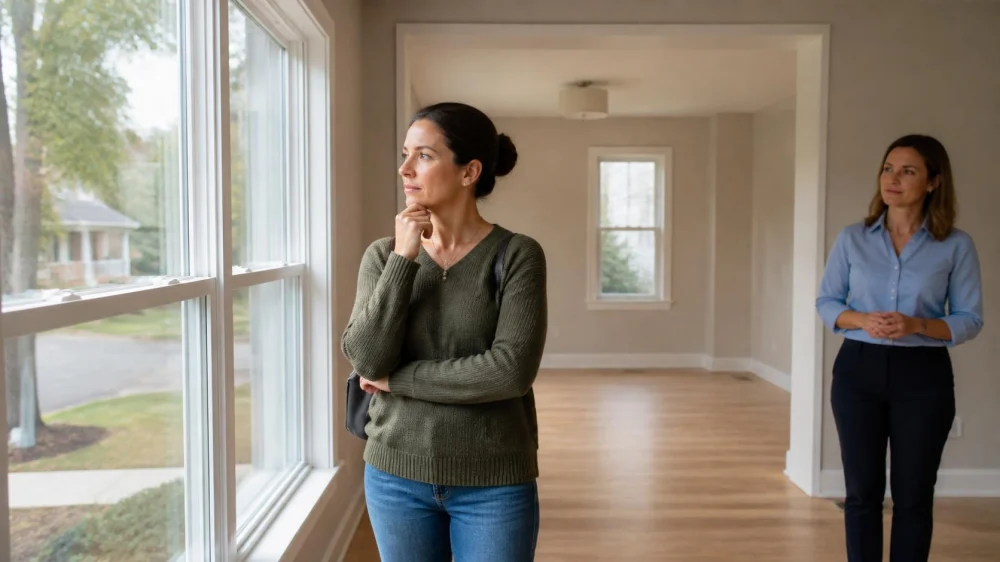
Home Tour Noise Check: Listen Before You Make an Offer
On this page
- Quick answer
- Why noise deserves a separate check
- What to listen for inside
- What to check outside
- How noise changes by time and season
- A practical tour checklist
- Questions and follow-up checks
- Decision rules for buyers
- Limitations and important notes
- Sources and evidence notes
- Frequently asked questions
- Conclusion and next steps
Quick answer
A useful home-tour noise check separates sounds that belong to the property from sounds that change with traffic, neighbors, weather, or time of day. Pause in each main room, turn off music when permitted, open and close windows, and revisit the area at a different time. Ask about shared walls, building systems, nearby activity, and any documented noise rules before making an offer.
This guide is for U.S. home buyers comparing properties. Noise tolerance is personal, and a short tour cannot prove what every day will sound like. Use these checks to identify questions and investigation needs, not to make accusations about neighbors or guarantee quiet.

787 Seventh Avenue / 787 seventh avenue new york
New YorkNew York CountyNew York
787 7th Ave, New York, NY 10019, USA
Why noise deserves a separate check
Noise can affect sleep, remote work, conversation, outdoor use, and the way a home feels. It is easy to overlook during a busy showing because buyers are talking, doors are opening, and attention is focused on finishes and room size.
A noise check is a deliberate observation of sound sources, transmission paths, and timing. It is not the same as measuring code compliance. A home can meet applicable requirements and still feel too loud for a particular buyer, while a noticeable sound may be acceptable once its schedule and source are understood.
The goal is to learn which sounds are controllable, which are recurring, and which remain uncertain. That helps you decide whether to investigate further, adjust expectations, or choose a different property.
Avalon Brooklyn Bay / avalon brooklyn bay
1501 Voorhies Ave, Brooklyn, NY 11235, USA
What to listen for inside
Start with the rooms where quiet matters most: bedrooms, home-office areas, and the main living space. Stand still for a short period and identify both steady and intermittent sounds.
- Mechanical systems: Listen when heating, cooling, ventilation, plumbing, appliances, pumps, elevators, or garage equipment operates.
- Sound between rooms: Notice whether ordinary conversation, footsteps, doors, or plumbing travel through walls, floors, or ceilings.
- Exterior transmission: Compare the room with windows closed and, if permitted, briefly open. Check whether traffic or outdoor activity changes sharply.
- Vibration and impact: Low-frequency equipment or footsteps above may feel different from voices or road sound.
- Quiet-room placement: Note whether bedrooms face a street, parking area, loading zone, shared stair, pool, playground, or building entrance.
Do not operate equipment without permission. Ask the agent or seller to demonstrate installed systems, and record which systems were running during the tour.
What to check outside
Walk the permitted exterior areas and look beyond the property line. Relevant sources may include major roads, rail lines, flight paths, schools, sports fields, commercial deliveries, construction, nightlife, emergency routes, parking gates, community amenities, and landscape equipment.
For a detached home, check front, rear, and side outdoor areas. For a condominium or cooperative, listen in hallways, elevators, garages, amenity spaces, and the route from the unit to the street. Shared spaces may reveal building activity that is not obvious inside the home.
Also inspect how the building is positioned. Distance, elevation, walls, vegetation, window orientation, and neighboring structures can change what reaches a room. Visual distance alone does not reliably predict sound.
How noise changes by time and season
A mid-morning tour offers only one sample. Commuter traffic, school schedules, deliveries, entertainment venues, weekend gatherings, and building maintenance can create different patterns.
If the property remains under serious consideration, return to the public area at a different time, such as an evening or commuting period. Respect private property, community rules, and residents’ privacy. Do not record private conversations or confront neighbors.
Season can matter too. Leaves, closed windows, air-conditioning use, outdoor events, and snow or rain may change sound conditions. You may not be able to observe every season, so identify seasonal sources and ask neutral, specific questions.
A practical tour checklist
- Ask for a quiet pause. Request a minute without conversation or background music in the main rooms.
- Note open and closed conditions. Compare windows and interior doors only when you have permission to operate them.
- Identify active systems. Ask which mechanical equipment is running and listen through a normal cycle when practical.
- Check sleep and work zones. Stand where a bed or desk would go, not only at the room entrance.
- Walk shared boundaries. Note party walls, upper or lower units, hallways, stairs, garages, and amenity areas.
- Scan nearby uses. Look for scheduled or intermittent activity that may not be operating during the tour.
- Record observations precisely. Write “steady road sound in rear bedroom at 11 a.m.” instead of simply “noisy.”
- Plan a second observation. Revisit the public area at a meaningfully different time before the decision deadline when possible.
Questions and follow-up checks
Ask the seller or listing representative factual questions rather than requesting a promise of silence:
- Are there known building projects, scheduled deliveries, or nearby construction plans?
- Which systems serve the home, and where is the equipment located?
- For shared housing, are there written floor-covering, quiet-hour, renovation, or pet rules?
- Are meeting minutes, notices, or other association records available for review?
- Have sound-related alterations been made, and are permits, invoices, or product details available?
Public planning, transportation, airport, and municipal sources may help confirm nearby projects or operating patterns. Availability varies by location. A real estate agent can help identify customary documents, but legal duties and disclosure rules differ by state and transaction.
If a sound concern could materially affect your decision, consider an acoustical consultant or an appropriate building professional. A phone sound-meter app may help compare moments informally, but it is not a substitute for calibrated professional measurement or a code-compliance evaluation.
Decision rules for buyers
- Proceed with ordinary due diligence when observed sound is acceptable to you and no important uncertainty remains.
- Investigate further when a source is intermittent, a major system was off, or the tour time was unrepresentative.
- Seek professional input when mitigation feasibility, building defects, or compliance may affect the purchase decision.
- Reconsider the property when the sound conflicts with a non-negotiable need and the source is outside your control.
Do not assume curtains, rugs, replacement windows, or wall treatments will solve every issue. Airborne sound, impact noise, vibration, and flanking paths can require different approaches, and alterations may be limited by building rules or historic requirements.
Limitations and important notes
- A tour captures conditions at one moment and cannot guarantee future sound levels.
- Seller disclosures and buyer investigation rights vary; consult appropriate local professionals for transaction-specific guidance.
- Do not trespass, impersonate a resident, or invade neighbors’ privacy while checking an area.
- Noise can be a health or accessibility concern for some buyers; explain relevant needs to qualified advisers without expecting a universal definition of “quiet.”
- Renovation estimates should account for building construction, approvals, and the actual sound path, not only a product advertisement.
Sources and evidence notes
This article reflects general real estate due-diligence and building-acoustics principles: sound varies by source, path, receiver, and time, and a brief observation has limits. It does not assert a particular decibel threshold, building-code requirement, disclosure duty, or mitigation result.
For a specific property, use available transaction documents, association records, public planning information, and advice from licensed real estate, inspection, legal, or acoustical professionals as appropriate.
Frequently asked questions
Is one quiet showing enough to judge a home?
No. It is useful evidence, but it may miss rush hour, weekends, deliveries, mechanical cycles, or seasonal activity. A second observation at another time reduces uncertainty.
Can I ask neighbors whether the area is noisy?
You can ask respectful, neutral questions where contact is appropriate, but individual opinions and schedules differ. Do not treat one answer as a guarantee or pressure someone to discuss other residents.
Do new windows eliminate traffic noise?
They may change sound transmission, but results depend on the complete window assembly, installation, walls, vents, doors, and other paths. Get property-specific professional advice before relying on a renovation.
Should I use a phone app to measure noise?
An app can help you compare observations informally. It may not be calibrated or suitable for legal, code, or professional conclusions. Record context and seek proper measurement when the result will drive a major decision.
What if a sound appears only after closing?
Document the source and timing, review transaction and association documents, and contact the appropriate property manager, real estate professional, insurer, attorney, contractor, or local authority depending on the issue. Available remedies depend on the facts and local rules.
Conclusion and next steps
Give sound the same deliberate attention as layout and condition. Pause inside, inspect shared and outdoor areas, note which systems are active, and revisit at another time. Then separate acceptable sounds from unresolved risks. If noise is central to your decision, obtain relevant records and qualified property-specific advice before you make an offer.






 Damianos Realty Group at 240 Middle Country0.0 (0 reviews)
 Insignia Realty Associates5.0 (14 reviews)
 J.D. Alber Realty LLC0.0 (0 reviews)
 Liz Realty Group3.0 (19 reviews)
 Cardinal Realty Group, LLC4.0 (16 reviews)
 Opera House Lofts2.0 (14 reviews)
 Understanding the Different Types of Mortgages: A Comprehensive Guide
 How to Find a Real Estate Agent for a Co-op Apartment Purchase
 Understanding Closing Processes and Key Documentation
 How to Stage Your Home for a Quick Sale
 How to Negotiate the Best Deal When Buying a Home
 Understanding Seasonal Trends in the Housing Market