
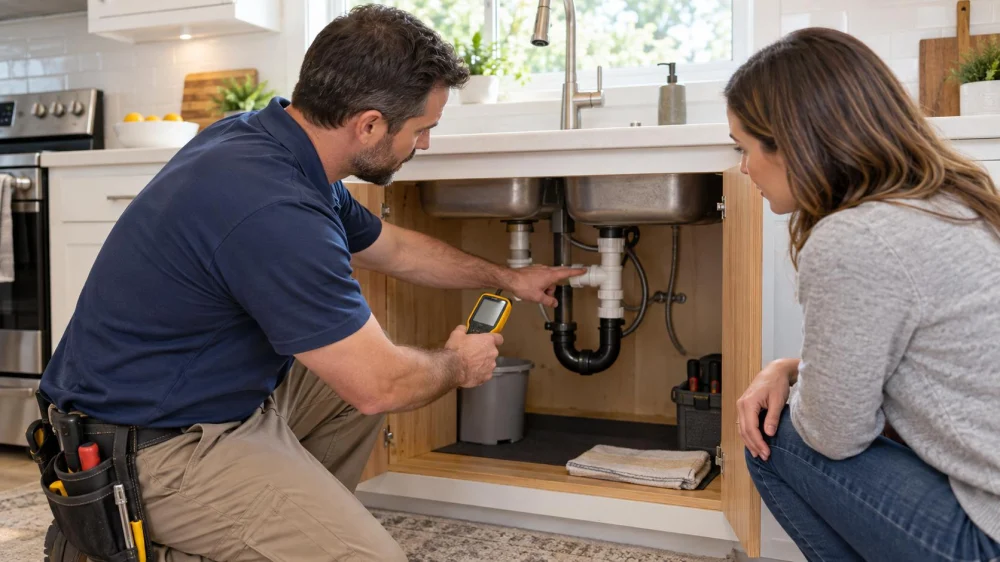
Home Inspection Repairs: How Buyers Set Priorities
On this page
Quick answer
Start by separating inspection findings into immediate safety hazards, systems at risk of near-term failure, moisture or structural concerns needing specialist review, routine maintenance, and cosmetic preferences. Verify major items with qualified contractors, check contract deadlines, and choose a focused response: seller repair, credit, price change, further inspection, or acceptance. Your contract and local law control available options.

West 130 / 130 west hempstead apartments
West HempsteadNassau CountyNew York
130 Hempstead Ave, West Hempstead, NY 11552, USA
Read the inspection report in context
A home inspection is a visual evaluation of accessible conditions at a point in time. The report can identify observed defects, safety concerns, maintenance needs, and areas that deserve further evaluation. It is not a warranty, code-compliance certificate, appraisal, or promise that concealed problems do not exist.
Read the full report before sorting individual photos. Inspectors often explain the limits of access, weather, utilities, and testing. A dramatic photo may document a minor defect, while a short note may identify a condition with larger consequences. Review summary pages, component sections, limitations, and recommendations together.
Confirm what the inspector actually observed. Terms such as “monitor,” “repair,” “replace,” and “evaluate by a specialist” do not mean the same thing. Ask the inspector to clarify the observation and recommended next step without asking for advice outside the inspector’s scope.

Avalon Brooklyn Bay / avalon brooklyn bay
1501 Voorhies Ave, Brooklyn, NY 11235, USA
Triage safety, function, and urgency
Use a consistent decision rule instead of negotiating every line. A practical order is safety, active damage, essential function, near-term failure, maintenance, and cosmetics. The categories can overlap, and a qualified professional may reclassify an issue after closer examination.
- Immediate safety: possible electrical hazards, combustion or ventilation concerns, unstable components, missing fall protection, or another condition the inspector identifies for prompt action.
- Active damage: ongoing leaks, visible moisture intrusion, pest activity, or movement that may worsen while the transaction proceeds.
- Essential systems: roof, structure, heating or cooling where relevant, plumbing, electrical service, water supply, sewage, and other systems needed for ordinary occupancy.
- Near-term expense: components operating now but showing age, damage, or performance concerns that justify specialist evaluation.
- Routine maintenance: smaller tasks that can be planned after closing.
- Cosmetic preference: finishes or appearance that do not materially affect safe function.
Do not personally test a condition the inspector marked unsafe or inaccessible. Use appropriately licensed or qualified professionals where the issue demands it.
Verify scope and likely consequences
The inspection report is often the start of due diligence, not the final diagnosis. For a major structural, roof, drainage, electrical, plumbing, environmental, or mechanical concern, ask whether a specialist should assess the problem during the inspection period. Confirm licensing, insurance, and independence requirements that apply in the property’s location.
When possible, request a written scope that distinguishes the observed symptom from the proposed remedy. A stain does not establish the full source of moisture. A system’s age does not by itself prove failure. Conversely, a functioning component can still present a documented safety concern.
Estimate consequences as well as repair cost:
- Could the condition make the home unsafe or uninsurable?
- Could delay allow damage to spread?
- Does the repair require permits, design, demolition, or temporary relocation?
- Would the lender or insurer require completion before closing?
- Could repair work affect another system or reveal concealed damage?
Online price ranges are not property-specific estimates. Local labor, access, materials, permits, and concealed conditions can change the scope substantially.
Choose the right response for each issue
Your available response depends on the purchase contract, contingency language, deadlines, seller agreement, financing, local law, and market conditions. Common options include requesting a seller-completed repair, a closing credit where permitted, a price change, additional inspection time, documentation, or acceptance of the condition.
Seller repair may fit a defined problem that must be completed before closing, but specify the standard, permits, qualified contractor, receipts, and reinspection rights. A credit can give the buyer control after closing, but lender rules may limit credits and the amount may not cover concealed or expanding work. A price change affects the transaction price but does not place repair funds in the buyer’s hands.
Further evaluation is appropriate when the cause or scope is uncertain. Acceptance may be reasonable for routine maintenance or a condition already reflected in the deal, provided the buyer understands the cost and risk. Contract cancellation or another remedy may be possible in some circumstances, but that is a legal and contract question.
Write a focused repair request
Organize the request around decisions, not the report’s page count. For each priority item, cite the report section, state the observed condition, attach the relevant excerpt or specialist document, and specify the requested outcome. Avoid declaring a cause or legal violation unless a qualified source supports it.
- Use clear item numbers and one requested resolution per item.
- State whether work needs a licensed contractor, permit, receipt, transferable warranty, or reinspection.
- Identify who will verify completion and by what date.
- Keep cosmetic preferences separate from safety and functional concerns.
- Submit through the contract’s required notice method before the deadline.
Evidence note: The Consumer Financial Protection Bureau’s home loan toolkit distinguishes a home inspector, who evaluates condition for the buyer, from an appraiser, who estimates market value for the lender, and recommends inspecting before the buyer is finally committed. The CFPB also advises buyers to review and correct closing documents before signing.
This article provides general U.S. homebuying information, not engineering, environmental, insurance, lending, tax, or legal advice. Do not miss a contract deadline while waiting for informal guidance. Ask the agent, attorney, inspector, lender, insurer, or specialist who is qualified for the specific question.
Frequently asked questions
Should a buyer ask the seller to fix every inspection item?
Usually a focused request communicates priorities more clearly. Separate significant safety, active-damage, and essential-system issues from routine maintenance and cosmetic preferences. Strategy still depends on the contract and local market.
Is a repair credit better than a seller repair?
Neither is always better. A credit may give the buyer control, while a seller repair may address a condition before closing. Compare lender limits, timing, scope uncertainty, contractor availability, and verification rights with the transaction professionals.
Can the appraisal replace the inspection?
No. An appraisal estimates value for lending purposes and may identify certain property conditions, but it is not the buyer’s comprehensive home inspection. Each serves a different role.
What if a specialist finds a larger problem?
Send the written findings to the appropriate transaction professional immediately, review remaining deadlines and remedies, and update the requested response. Do not rely on the original repair estimate if the scope has materially changed.
Next steps
Read the entire inspection report, mark the inspection and notice deadlines, and classify each finding by safety, active damage, function, urgency, maintenance, or cosmetics. Obtain specialist input for material uncertainty, then prepare a short written request tied to evidence and a clear outcome.
Before closing, collect repair receipts, permits, warranties, paid invoices, and reinspection results required by the agreement. Confirm that the final walk-through and closing documents reflect the negotiated resolution, and preserve the inspection records for future maintenance planning.





 Frank Galeano Real Estate4.0 (5 reviews)
 Botensten Properties International (BPI)5.0 (39 reviews)
 Aban Reality Inc.0.0 (0 reviews)
 Village Dwellings Inc2.0 (3 reviews)
 VRK TEAM at CORCORAN0.0 (0 reviews)
 Elite NY Holdings4.0 (26 reviews)
 Buying a Home With Student Loan Debt: 2026 Strategies
 How to Navigate Renovations to Maximize Resale Value
 How to Save Money on Home Purchases and Closings
 The Importance of Curb Appeal When Selling Your Home
 How to Build Equity in Your Home Faster
 How to Navigate Bidding Wars in Competitive Housing Markets