
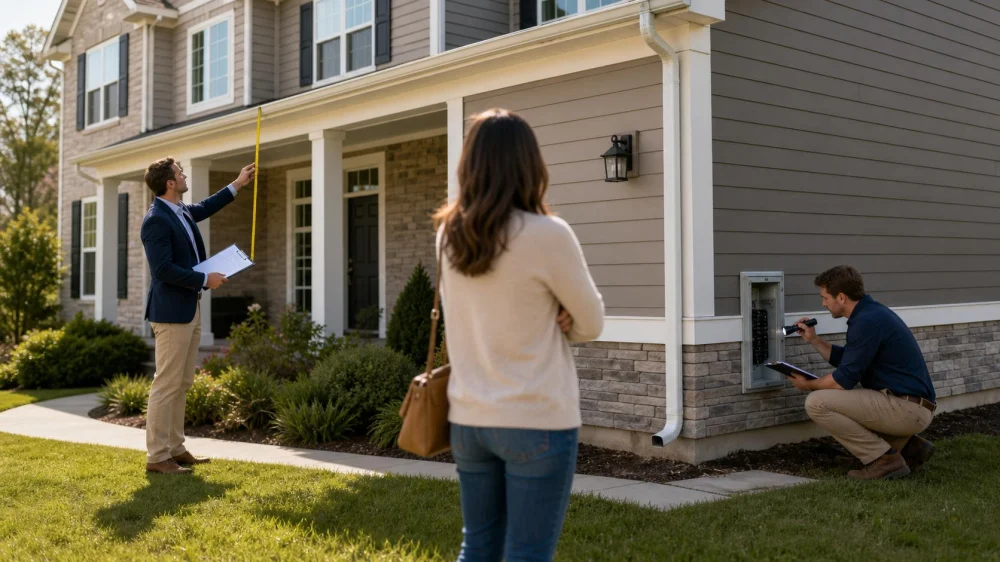
Home Appraisal vs. Inspection: A Buyer’s Guide
On this page
- Quick answer
- The two jobs in plain language
- Appraisal and inspection compared
- What an appraisal can tell you
- What a home inspection can tell you
- How they fit into the buying timeline
- How to respond to each report
- Buyer checklist
- Important limitations
- Frequently asked questions
- Sources and evidence notes
- Next steps
Quick answer
A home appraisal estimates property value mainly for the lender, while a home inspection evaluates visible physical condition mainly for the buyer. An appraisal may note obvious condition concerns or loan-program requirements, but it is not a comprehensive defect check. Buyers usually need both: review the appraisal for value and property facts, and use an independent inspection to understand systems, repairs, safety concerns, and whether specialized evaluation is needed.

Avalon Brooklyn Bay / avalon brooklyn bay
1501 Voorhies Ave, Brooklyn, NY 11235, USA
The two jobs in plain language
A home appraisal is an independent opinion of a property’s market value as of a specific date, prepared for a defined lending or transaction purpose. The appraiser analyzes the property, relevant market information, and comparable sales using the assignment’s required scope.
A home inspection is a visual, condition-focused examination of accessible home components performed for the client under an agreed scope. It helps a buyer understand observed defects, maintenance needs, and areas that may need further evaluation.
Neither service guarantees future performance or reveals every concealed problem. Their purposes, clients, standards, timing, and remedies differ.

West 130 / 130 west hempstead apartments
West HempsteadNassau CountyNew York
130 Hempstead Ave, West Hempstead, NY 11552, USA
Appraisal and inspection compared
| Question | Appraisal | Home inspection |
|---|---|---|
| Primary purpose | Estimate market value for the assignment | Describe visible physical condition |
| Usually ordered by | Mortgage lender | Buyer |
| Main user | Lender, with a copy available to the borrower | Buyer who hired the inspector |
| Typical analysis | Property characteristics, condition observations, comparable sales, market | Accessible structure, roof, exterior, plumbing, electrical, heating, cooling, interiors, and other included systems |
| Main output | Opinion of value and supporting report | Condition report with observations and recommendations |
| Does it replace the other? | No | No |
What an appraisal can tell you
An appraisal may help a lender decide whether the property supports the requested loan. The report may describe the dwelling, site, neighborhood or market area, comparable sales, adjustments, observed condition, and the appraiser’s value conclusion.
Review it for:
- correct address, unit, property type, and basic characteristics;
- stated living area, room count, lot information, and improvements;
- comparable sales and major adjustments;
- effective date and value conclusion;
- repairs or conditions that the appraisal makes the value subject to;
- factual errors or unsupported characteristics that could affect value.
For many first-lien residential mortgage applications, CFPB guidance says borrowers are entitled to copies of appraisals and other written valuations obtained by the lender. The lender may charge for obtaining an appraisal but not an extra fee simply for the copy.
What a home inspection can tell you
A general home inspection is designed to identify visible conditions within its contract and standard of practice. It can help a buyer understand how components function, what may need repair, and which concerns warrant a specialist.
Ask the inspector what is included and excluded. Common limitations involve inaccessible areas, concealed defects, environmental testing, code compliance, sewer lines, chimneys, pools, pests, and specialized engineering. Additional services may be appropriate based on property age, location, construction, disclosures, and observed conditions.
When possible, attend the inspection. CFPB recommends attending because it makes the report easier to interpret and gives buyers a chance to ask questions. Do not operate unsafe equipment or enter restricted spaces yourself.
How they fit into the buying timeline
- Before the offer: understand local inspection availability and discuss possible contract contingencies with your agent or attorney.
- After acceptance: schedule the independent inspection promptly enough to meet contract deadlines.
- During loan processing: the lender typically orders or manages the appraisal process.
- When reports arrive: review each for its own purpose; do not wait for one report to replace the other.
- Before deadlines expire: follow the purchase contract for objections, negotiations, additional inspections, appraisal issues, financing, or cancellation rights.
- Before closing: complete the final walkthrough, which confirms agreed condition and completed work but is not another full inspection.
Deadlines and rights come from the signed contract and applicable law. A general article cannot determine whether a buyer may renegotiate or cancel.
How to respond to each report
If the appraisal is below the contract price
- Get the complete report and check factual property information.
- Ask the lender about its reconsideration process if credible data or errors were missed.
- Review the appraisal contingency and financing terms with an appropriate professional.
- Possible paths can include renegotiating, changing the down payment, challenging material errors, or leaving the transaction when the contract permits.
If the inspection finds problems
- Separate urgent safety or structural concerns from maintenance and cosmetic items.
- Obtain qualified specialist evaluation when the inspector recommends it.
- Estimate scope before assuming a repair cost.
- Use the inspection contingency and written contract process for requests or decisions.
The lowest repair estimate is not automatically the right basis for negotiation. Scope, permits, access, hidden conditions, warranties, and contractor qualifications matter.
Buyer checklist
- Read the inspection and appraisal contingencies before signing.
- Choose an independent inspector and verify qualifications required in the state.
- Confirm inspection scope, fee, report timing, and optional services.
- Attend when practical and safe.
- Read the entire inspection report, not only the summary.
- Request and review the appraisal copy.
- Check property facts and ask the lender about material concerns.
- Track every contract deadline in writing.
- Use qualified legal, lending, insurance, tax, engineering, or trade advice when needed.
Important limitations
Mortgage programs, appraisal methods, inspection regulation, contracts, disclosure duties, contingency forms, and remedies vary across US states, lenders, and transactions. Some valuation assignments use different property-visit methods. Some loan programs impose minimum property requirements, but those are not a buyer-focused inspection guarantee.
Appraisers and inspectors generally cannot see through walls, predict every failure, or guarantee a defect-free home. New construction also benefits from independent inspection at appropriate stages. Immediate electrical, gas, structural, fire, or environmental danger requires qualified professional or emergency response, not reliance on a transaction report alone.
Frequently asked questions
Can a house pass an appraisal and fail an inspection?
Yes. The appraisal may support value and lending requirements while an inspection identifies defects or maintenance concerns. The services answer different questions.
Does the lender order the home inspection?
Generally the buyer arranges an independent inspection. The lender commonly manages the appraisal. Follow the contract and loan instructions for the specific transaction.
Does a low appraisal mean the house has defects?
Not necessarily. Value can reflect comparable sales, market conditions, property characteristics, or report issues. Physical defects may affect value, but the appraisal is not a comprehensive condition assessment.
Should I waive an inspection to strengthen an offer?
Waiving or narrowing inspection protection can create significant risk. Consider property condition, contract language, financing, market pressure, and professional advice before giving up rights.
Who receives the appraisal report?
The lender is usually the appraisal client. CFPB guidance explains that borrowers in covered mortgage transactions are entitled to copies of appraisals and other valuations the lender obtains.
Sources and evidence notes
The US Consumer Financial Protection Bureau states that a home inspection differs from an appraisal and buyers generally need both. Its guidance describes the inspection as buyer protection and the appraisal as a lender-required valuation in many mortgage transactions.
US Department of Housing and Urban Development materials likewise state that an appraisal estimates property value for lending and does not replace a buyer’s home inspection. Fannie Mae consumer guidance also describes appraisal and inspection as separate processes. These sources support the comparison; the signed contract, lender, inspector agreement, and applicable state law control the transaction.
Next steps
Put appraisal and inspection deadlines on one transaction calendar. Hire the inspector early, request the appraisal copy, and review each report using a separate question list: “What is the property worth for this lending decision?” and “What is the visible condition, and what requires further evaluation?”
A careful buyer does not ask which report is better. The useful question is whether both value risk and condition risk have been examined before contractual options expire.





 Genix Group LLC0.0 (0 reviews)
 Katelyn Holding Ltd0.0 (0 reviews)
 City Homes Realty Group5.0 (284 reviews)
 Post Properties Inc0.0 (0 reviews)
 Elliot Warren Commercial Leasing0.0 (0 reviews)
 William Raveis Real Estate - New York City5.0 (12 reviews)
 Understanding Real Estate Contracts and Legal Terms | Luxen House Realty Hub
 The Future of iBuyers: Are Opendoor and Offerpad Still Buying?
 How to Maximize Profit When Flipping Houses
 How to Maximize Returns When Flipping Homes
 How to Determine the Best Time to List Your Home for Sale
 How to Evaluate a Property’s Investment Potential