
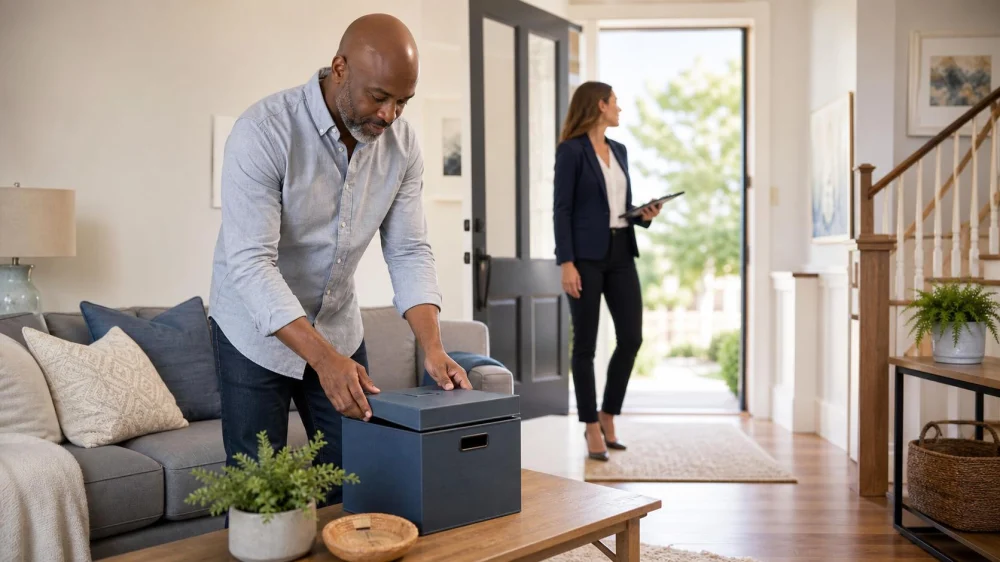
Open House Safety and Privacy Tips for Home Sellers
On this page
- Quick answer
- Set the access plan with your agent
- Protect private information and valuables
- Prepare the home for safer visitor flow
- Smart devices, cameras, and recording
- A day-of open house checklist
- What to check after the event
- Important limits and professional guidance
- Sources and evidence notes
- Frequently asked questions
- Conclusion and next steps
Quick answer
Before an open house, remove medicines, identity documents, financial papers, keys, small valuables, weapons, and personal technology rather than hiding them in a drawer. Agree with the hosting real estate professional on visitor entry, supervision, restricted areas, pets, and closing checks. Review local recording and disclosure rules before using cameras or audio, and inspect the home promptly after visitors leave.

Prism at Park Avenue South Apartments / prism at park avenue south apartments
New YorkNew York CountyNew York
50 E 28th St, New York, NY 10016, USA
Set the access plan with your agent
An open house invites multiple visitors into a private residence during a defined period. An open house safety plan is a written or clearly agreed process for entry, supervision, restricted spaces, incident response, and securing the property afterward.
Ask the hosting real estate professional who will be present, how visitors will enter and exit, whether attendance information will be requested, and how many areas one person can reasonably observe. Discuss any applicable brokerage procedures, property rules, or occupancy concerns.
Decide which rooms, cabinets, outbuildings, or storage areas should remain unavailable. A restricted area should be clearly handled in the showing plan; simply locking an interior door may create questions for buyers and could affect access needed for a later inspection or appraisal.
Confirm emergency contacts and who will act if a visitor becomes ill, a pet escapes, property is damaged, or suspicious activity occurs. Sellers are generally better off leaving during the event unless the hosting professional recommends otherwise.

West 130 / 130 west hempstead apartments
West HempsteadNassau CountyNew York
130 Hempstead Ave, West Hempstead, NY 11552, USA
Protect private information and valuables
Do not rely on clever hiding places. Remove or securely store items that could expose identity, finances, health information, access, or account security:
- passports, Social Security cards, mail, bills, tax papers, checkbooks, and insurance documents;
- prescription and over-the-counter medicines, supplements, and medication packaging;
- cash, jewelry, collectibles, portable electronics, and small sentimental items;
- house, vehicle, mailbox, storage, and workplace keys or access cards;
- firearms, ammunition, and other weapons, handled according to applicable law and safe-storage requirements;
- calendars, school details, travel plans, family photos with identifying captions, and visible passwords;
- computers, drives, tablets, and smart displays that reveal notifications or personal accounts.
A locked container that remains in the home may still be portable. When practical, move high-risk items off-site for the event. Shred or relocate discarded labels and paperwork rather than placing them in an accessible bin.
Prepare the home for safer visitor flow
Walk the likely route as if you were unfamiliar with the property. Repair or clearly address loose rugs, exposed cords, unstable railings, poor lighting, low obstacles, slippery surfaces, and cluttered stairs. Keep normal exits usable.
Store tools, chemicals, sharp objects, matches, and other hazardous products. Secure pools, hot tubs, balconies, gates, garages, workshops, and other areas according to the property and local requirements. Do not create a display that hides a known hazard.
Make a plan for pets before visitors arrive. Even a friendly animal can become stressed, escape through an open door, or trigger an allergy or fear response. Off-site care or a secure arrangement away from visitor traffic is often easier than asking every guest to follow special instructions.
Remove highly personal displays when they reveal routines or identities, but do not conceal property conditions that must be disclosed. Staging and privacy protection are different from misrepresentation.
Smart devices, cameras, and recording
Doorbells, indoor cameras, baby monitors, voice assistants, security systems, and connected locks can capture visitor data or reveal seller information. Review what each device records, where data goes, who can access it, and which notifications or screens are visible.
Audio and video recording laws vary by state and circumstances. Expectations of privacy can also differ by location within a home. Before recording visitors or conversations, ask a qualified local real estate professional or attorney about consent, notice, disclosure, and brokerage rules. Do not place recording devices in private areas.
Change temporary access codes after the event when appropriate. Avoid displaying alarm details, network passwords, or device names. If equipment must stay active for security, include it in the agreed open house plan.
A day-of open house checklist
- Remove private papers, medicines, valuables, keys, weapons, and portable devices.
- Log out of computers and smart displays; silence previews and personal notifications.
- Relocate pets and their sensitive records, medicines, and access items.
- Check walkways, stairs, lighting, doors, windows, gates, and obvious hazards.
- Confirm restricted areas, visitor flow, hosting coverage, and emergency contacts.
- Count or photograph important fixtures that will remain with the property if that helps later verification, while respecting privacy.
- Leave the property as agreed and keep the hosting professional’s contact information available.
What to check after the event
Return only after the hosting professional confirms that visitors have left. Walk through the home together or follow the agreed process. Check exterior and interior doors, windows, gates, cabinets that were opened, utilities, thermostats, smart devices, and any area that was restricted.
Confirm that keys, remotes, portable objects, medicines, and displayed fixtures remain in place. Look for damage, spills, moved furniture, or a safety issue that needs immediate attention. Reset access codes or device permissions when the event used temporary access.
If something is missing or damaged, document what you observe and contact the hosting professional promptly. For suspected theft, trespass, or immediate danger, follow local law-enforcement or emergency procedures. Avoid confronting a visitor yourself.
Important limits and professional guidance
No checklist can eliminate all risk, and open house practices differ by property, brokerage, association, and state. Attendance logs or identification procedures do not guarantee that information is accurate or that every visitor can be continuously observed.
Insurance coverage, premises liability, surveillance, firearms, disclosures, and fair housing obligations can involve legal questions. Use licensed real estate, legal, insurance, or security professionals for advice within their roles. This article is general U.S. education, not legal or insurance advice.
Sources and evidence notes
The guidance here follows broad risk-reduction practice: remove portable high-value and sensitive items, reduce trip and access hazards, plan supervision, limit unnecessary data exposure, and verify the property after public access ends. It does not claim that any single step prevents theft, injury, or privacy loss.
Local rules and the seller’s listing agreement should guide the final plan. Document property-specific concerns and review them with the professional hosting the event.
Frequently asked questions
Should sellers stay home during an open house?
Usually sellers should follow the hosting professional’s plan. Their presence can change visitor behavior and create awkward conversations. If a seller must remain, agree in advance on location, role, and safety boundaries.
Is locking valuables in a bedroom enough?
Not necessarily. A locked room may be challenged, entered accidentally, or incompatible with the showing plan. Removing portable sensitive items from the property is often more reliable.
Can I record visitors with my doorbell camera?
Do not assume. Video and audio rules, consent requirements, and brokerage policies vary. Disclose devices and obtain local professional guidance before recording.
What should I do with prescription medicine?
Remove it from visitor access, including refrigerated medicine when feasible under proper storage instructions. Do not leave labeled containers in bathroom or kitchen cabinets.
How should I handle an unexpected visitor after the open house?
Do not provide unsupervised access. Direct the person to the listing contact or established showing process. Call emergency services if the situation feels immediately dangerous.
Conclusion and next steps
Start with the items that cannot be replaced easily: identity records, medicines, keys, private data, and sentimental valuables. Then walk the visitor route, confirm supervision and restricted areas, review device rules, and agree on the final lock-up check. A clear plan between seller and hosting professional protects privacy while keeping the property accessible to legitimate buyers.




 Gittens Quick Sale Realty, Inc.3.0 (19 reviews)
 Weichert Realtors TMT Group4.0 (9 reviews)
 DWELL Residential4.0 (26 reviews)
 Team Rita-Realty Connect USA | Real Estate Agency in Centereach | Realtors4.0 (111 reviews)
 MadoInc5.0 (4 reviews)
 Paramount Realty USA3.0 (3 reviews)
 How to Buy Property With Long-Term Appreciation Potential
 Understanding the Role of Appraisers in Real Estate
 Tips for Avoiding Real Estate Investment Pitfalls | Luxen House Realty Hub
 How to Negotiate the Best Deal When Buying a Home
 Tips for Buying a Vacation Home in 2025: A Complete Guide
 Understanding Various Types of Home Loans and Mortgages: A Complete Guide