
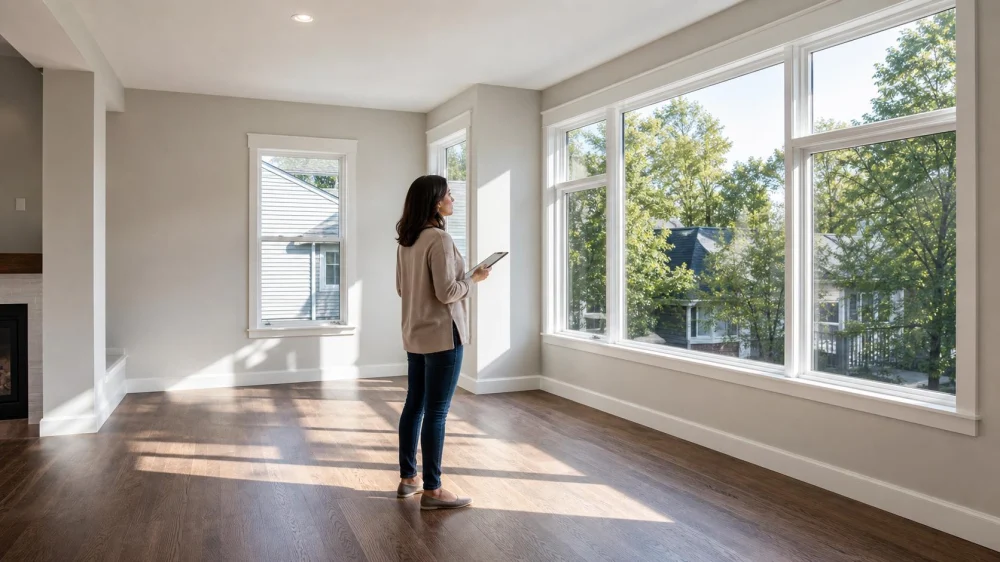
How to Evaluate Natural Light Before Buying a Home
On this page
- Quick answer
- Define what good natural light means to you
- Visit at useful times
- Use a room-by-room light checklist
- Look beyond window size
- Consider glare, heat, and energy
- Document what you observe
- When to seek professional input
- Limitations and important notes
- Evidence notes
- Frequently asked questions
- Next steps
Quick answer
Evaluate natural light by observing each important room at the time you expect to use it, not by counting windows. Note the home’s orientation, outdoor obstructions, overhangs, glass type, glare, privacy, and signs of excess heat or fading. If light is a priority, arrange a second visit at a different time and verify any planned window changes before making an offer.

787 Seventh Avenue / 787 seventh avenue new york
New YorkNew York CountyNew York
787 7th Ave, New York, NY 10019, USA
Define what good natural light means to you
“Bright” is not one universal standard. A buyer who works from home may want steady, low-glare daylight at a desk. A cook may value morning light in the kitchen, while another household may prefer a darker bedroom for daytime sleep.
Before a showing, rank the rooms where daylight matters most and write down when those rooms will be used. Separate three goals:
- Brightness: Enough usable daylight for normal activity
- Sun exposure: Direct sunlight at a preferred time
- Visual comfort: Light without persistent glare, overheating, or lost privacy
This prevents a dramatic sunny living room from distracting you from a dim kitchen, workspace, or stairway that matters more in daily life.

90W Luxury Apartments / 90w nyc
New YorkNew York CountyNew York
90 Washington St, New York, NY 10006, USA
Visit at useful times
A single showing is a snapshot. Weather, season, tree cover, nearby buildings, and the sun’s position can all change what you see. If possible, visit once near the time you would normally use the main living areas and again at a different part of the day.
- Check the listing or a compass app for the approximate direction each main window faces.
- Observe the sky condition and time so you can interpret the visit later.
- Turn off electric lights briefly with permission.
- Stand where furniture would actually go, not only beside the window.
- Look for direct sun, diffuse light, sharp glare, and dark interior corners.
- Check outdoor features that may shade the window now or in another season.
Do not trespass or peer into occupied neighboring property. A repeat visit should be arranged through the seller or real estate professionals involved.
Use a room-by-room light checklist
- Living area: Can you see comfortably where seating and screens would go? Would direct sun reflect on a television?
- Kitchen: Are counters and food-preparation areas lit, or does the person working block the window light?
- Bedrooms: Does the timing of sun match sleep needs? Are effective window coverings practical?
- Home office: Is there usable side light without strong screen glare or a bright window directly behind the monitor?
- Bathrooms: Is daylight balanced with privacy and ventilation needs?
- Hallways and stairs: Are transitions between bright and dark areas comfortable and safe?
- Lower level: Check window wells, exterior grade, and whether finished space depends heavily on electric lighting.
Take consistent notes such as “comfortable without lights,” “bright only near window,” or “strong glare at desk location.” These observations are easier to compare than phone photos, which automatically adjust exposure and can make a dark room look brighter.
Look beyond window size
Large glass does not guarantee useful daylight. A deep roof overhang, covered porch, neighboring wall, mature evergreen, tinted film, insect screen, or dirty skylight can reduce light. Room depth, ceiling height, wall color, and interior doors also affect how far light reaches.
Inspect the window itself for cloudiness between panes, damaged seals, cracked glass, difficult operation, water staining, or deteriorated trim. These are condition issues rather than daylight preferences and may warrant closer inspection.
Ask what stays with the property. Heavy curtains may be removable, but exterior awnings, shutters, architectural screens, and protected trees may be harder to change. If a listing photo was taken with specialty lighting or at a different season, treat it as marketing context rather than proof of year-round conditions.
Consider glare, heat, and energy
More direct sun can bring more glare and solar heat. The effect depends on climate, window direction, glass and coatings, exterior shading, insulation, and the home’s heating and cooling systems. Do not assume a sunny room is automatically efficient or inefficient.
The U.S. Department of Energy notes that window placement and orientation influence daylight, glare, and heat gain. South-facing glass can admit useful winter sun when designed with appropriate seasonal shading, while north-facing windows often provide more even light with less glare. East and west exposures can be harder to shade because the sun is lower in the sky.
During the showing, look for closed blinds on an otherwise bright day, portable cooling equipment, faded flooring, or a room that feels much warmer than adjacent spaces. These clues justify questions; they do not prove a defect. Ask for available energy records, window specifications, and information about recent upgrades where relevant.
Document what you observe
Create a simple comparison table for every serious property:
- Date, time, season, and weather
- Direction of priority windows
- Usable daylight in each priority room
- Glare, privacy, and heat concerns
- Outdoor obstructions and whether they appear permanent
- Window condition questions
- Changes you would need and an estimate category: minor, moderate, or major
Keep preference separate from condition. “Bedroom is too bright for me” is a preference that window coverings may solve. “Moisture appears trapped between panes” is a condition question for an inspector or window professional.
When to seek professional input
A general home inspector can comment on visible window condition, signs of water intrusion, and operation within the inspection scope. An energy auditor or qualified building professional can provide more focused information about heat transfer, air leakage, shading, and comfort. A contractor can assess the feasibility and cost of adding or enlarging a window.
Seek specialist advice before relying on a major change. New openings may affect structure, weather protection, electrical or plumbing systems, exterior appearance, permits, and association rules. Skylights also require careful flashing and roof integration. Verify feasibility rather than assuming a dark room can be cheaply transformed.
Limitations and important notes
A showing cannot predict every season or weather condition. Trees may lose leaves, nearby construction may alter exposure, and the sun’s path changes throughout the year. Phone compass readings and sun-tracking apps are useful screening tools but may be inaccurate near metal or indoors.
Seller disclosures, inspection practices, alteration rules, and permit requirements vary across the United States. Ask local real estate, inspection, design, or legal professionals about property-specific questions. This article is a buyer observation guide, not an engineering opinion, energy audit, or promise of future conditions.
Evidence notes
The U.S. Department of Energy’s daylighting overview explains how window placement, orientation, and interior design affect natural light and temperature. DOE also advises evaluating glazing according to climate, orientation, and building design in its window technology guidance.
These building-science principles help frame questions, but actual performance depends on the specific home. Direct observation and appropriate professional inspection remain important before a purchase.
Frequently asked questions
Which direction gives a home the most natural light?
There is no single best direction for every room, climate, and lifestyle. In the United States, south-facing windows can receive substantial sun, north-facing windows often provide steadier diffuse light, and east or west windows tend to receive lower-angle morning or afternoon sun. Shading and nearby structures can change the result.
Can listing photos show whether a room is dark?
Not reliably. Camera exposure, wide-angle lenses, supplemental lighting, editing, season, and time of day can change the appearance. Use photos to plan what to inspect, then evaluate the room in person when possible.
Should I turn off the lights during a showing?
Yes, with permission and without creating a safety hazard. Check the room both with and without its normal fixtures so you understand the daylight and the practical lighting plan.
Can window film solve glare?
Film, shades, exterior shading, and layout changes may help, but each affects light, view, appearance, and sometimes heat differently. Verify compatibility with the glass and any warranty, association, or local requirements before installation.
Next steps
Identify your priority rooms and use times, visit under known conditions, and record light, glare, privacy, heat, obstructions, and window condition separately. If the home remains a serious option, return at another time of day and ask professionals to verify any condition concern or planned structural change.
The goal is not the brightest possible home. It is a home whose daylight pattern supports the way you expect to live without creating problems you did not budget or plan to solve.






 John Oliveri, Westchester Realtor5.0 (4 reviews)
 360 West 43rd Street3.0 (31 reviews)
 Taleen & Richie Krug Jr- The RTK Realty Group @ CB American Homes (Formerly of The Krug Team)4.0 (69 reviews)
 Realtor Bk0.0 (0 reviews)
 BonAnno Realty ERA Powered4.0 (40 reviews)
 Udoh Dabel Realty Services0.0 (0 reviews)
 Understanding the Risks of Real Estate Investment and How to Navigate Them
 How to Navigate the Home Appraisal Process Successfully
 How to Evaluate Market Trends Before Making Real Estate Investments
 How to Make Smart Real Estate Investment Decisions: Tips for Success
 How to Prepare Your Home for Seasonal Market Changes: Essential Tips
 Understanding Closing Processes and Key Documentation