
Condo Reserve Studies: Questions Buyers Should Ask
On this page
Quick answer
A condo reserve study estimates when shared building components may need repair or replacement and how much the association should save. Buyers should compare the study's date, component list, funding assumptions, and recommended contributions with budgets, financial statements, meeting minutes, recent inspections, and planned projects. Gaps deserve explanation; they do not automatically prove that a property is unsuitable.
A reserve study is a planning document that evaluates major common assets, estimates their remaining useful life and replacement cost, and models how an owners association may fund future work. It is not the same as a property inspection, guarantee, appraisal, or promise that expenses will follow the forecast.
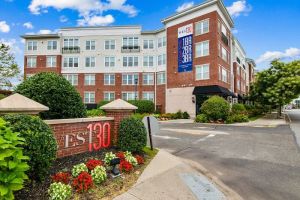
West 130 / 130 west hempstead apartments
West HempsteadNassau CountyNew York
130 Hempstead Ave, West Hempstead, NY 11552, USA
What a reserve study is
This guide is for prospective condominium buyers in the United States who receive association documents during due diligence. Terminology, disclosure duties, review periods, and association practices vary by state and transaction. Buyers of cooperatives, planned communities, or mixed-use properties may receive different documents.
The study commonly covers shared components such as roofs, exterior finishes, elevators, paving, mechanical systems, pools, and common-area interiors. It may show current reserve balances, projected expenses, a funding plan, and a recommended contribution level. The useful question is not simply whether the reserve balance looks large; it is whether the funding and maintenance plan plausibly match the assets and upcoming work.
Age matters. Construction costs, completed projects, deterioration, insurance conditions, and association decisions can change after a study is prepared. Ask whether it has been updated and what material events occurred since its inspection date.

90W Luxury Apartments / 90w nyc
New YorkNew York CountyNew York
90 Washington St, New York, NY 10006, USA
Documents to review together
- The full reserve study, including assumptions, component tables, and funding projections.
- Current budget, recent financial statements, reserve account balances, and delinquency information when provided.
- Board and owner meeting minutes for discussions of repairs, bids, leaks, structural concerns, assessments, or delayed projects.
- Notices of approved or proposed special assessments and any payment schedule.
- Recent engineering, structural, roof, elevator, or other specialist reports made available for the property.
- Association insurance summaries and information about major claims or coverage changes when available.
- Governing documents explaining maintenance responsibility for windows, balconies, pipes, HVAC equipment, and other boundary items.
Cross-check dates and amounts. A project described as future work in an older study may already be complete, deferred, expanded, or funded through another method. Meeting minutes can provide context, but silence in minutes does not prove that no issue exists.
Questions for the review
- When was the property physically inspected for the study, and when is the next update planned?
- Which components were included, excluded, or treated as an owner's responsibility?
- What inflation, investment return, and useful-life assumptions drive the forecast?
- How does the association's actual reserve contribution compare with the recommended plan?
- Which major projects are expected during the next several years, and have bids or contracts been obtained?
- Are any projects deferred, underfunded, disputed, or dependent on borrowing or a special assessment?
- Have inspections, damage, insurance requirements, or code issues changed the plan since the study?
Ask for answers through the channel allowed by the transaction. The seller, association, management company, real estate agent, lender, insurer, attorney, and inspector have different roles; do not assume one party can verify every item.
Decision rules for buyers
More reassuring: The study is current, key assets are included, recent spending follows the plan, financial records reconcile, and the association can explain material changes.
Needs deeper review: The study is old, balances differ from projections, large projects are approaching, contributions were reduced, or meeting minutes mention repeated deferrals. These facts call for updated documents and qualified advice, not an instant conclusion.
Not ideal for a buyer with little cash flexibility: Even a desirable unit may be a poor fit if plausible assessments, fee increases, or repair-related financing would strain the buyer's budget. Model more than one scenario with a qualified financial or lending professional.
Compare properties using the same categories: reserve planning, current condition, monthly obligations, insurance, owner responsibility, pending work, governance, and document transparency. A lower association fee is not automatically better if essential maintenance is postponed.
Limitations and professional checks
This article is general educational information, not legal, financial, engineering, insurance, tax, or investment advice. A reserve study can contain estimates and may not reveal concealed damage or events after the inspection. Never invent a “safe” reserve percentage or universal dollar threshold; the appropriate funding depends on the property and applicable rules.
Consider an attorney for contract and disclosure questions, a qualified inspector or engineer for building-condition concerns, and financial, lending, tax, or insurance professionals for consequences within their scope. Follow transaction deadlines carefully because document-review and cancellation rights may be time-limited.
Evidence note: Comparing reserve forecasts with current financial and maintenance records is a common due-diligence practice. The available documents and legal significance differ by jurisdiction and association.
Frequently asked questions
Does a fully funded reserve mean there will be no special assessment?
No. Unexpected damage, cost changes, insurance events, project expansion, or board decisions can still alter funding needs.
Is an old reserve study useless?
Not necessarily, but it needs context. Compare it with completed work, current balances, recent inspections, budgets, and meeting minutes, and request an update if available.
Should a buyer focus only on the reserve balance?
No. The balance has meaning only alongside the assets, expected timing and cost of work, contribution plan, obligations, and association records.
Can a home inspector verify the association's entire reserve plan?
A unit inspection and a reserve analysis have different scopes. Ask the inspector what is covered and use appropriate specialists for common building systems or financial questions.
Where can buyers obtain the reserve study?
Availability varies. It may be included in resale disclosures or requested through the seller, association, management company, or transaction professionals under local procedures.
Conclusion and next steps
Request the complete study, record its inspection date, identify upcoming major work, and reconcile the plan with current budgets, balances, minutes, assessments, and specialist reports. Write down unanswered questions and route each one to the appropriate professional before the review deadline. The goal is not to predict every repair; it is to understand whether the property's shared obligations fit your risk tolerance and budget.





 Astoria Rentals5.0 (2 reviews)
 The Garnett3.0 (20 reviews)
 TKO Suites - Midtown East4.0 (40 reviews)
 Wyckoff Realty0.0 (0 reviews)
 Lina Shi4.0 (5 reviews)
 EAGLE HEIGHTS REAL ESTATE, INC.0.0 (0 reviews)
 Tips for Managing Rental Properties Remotely
 How to Buy Property With Long-Term Appreciation Potential
 How to Find Profitable Rental Properties in Competitive Markets
 How to Stage Your Home for Maximum Online Appeal: Tips and Techniques
 How to Make Your Home Energy-Efficient and Attractive to Buyers
 How to Avoid Delays During the Closing Process