
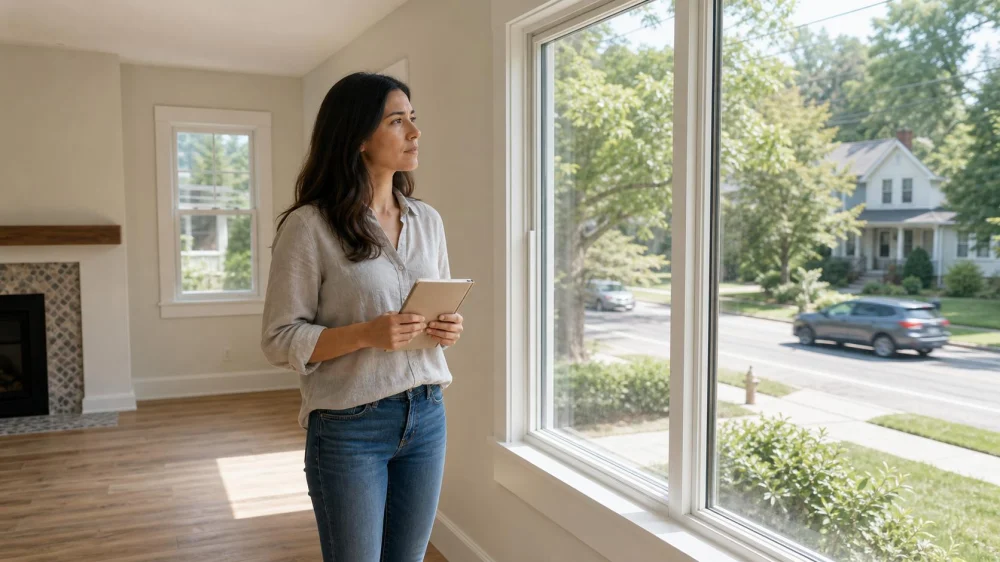
How to Evaluate Noise Before Buying a Home
On this page
Quick answer
Evaluate a home’s noise before buying by identifying nearby roads, rail lines, flight paths, businesses, schools, recreation areas, and building equipment; visiting more than once at different times; and listening inside with windows both open and closed. Record what you hear, how long it lasts, and which rooms are affected. Compare the result with your schedule, sleep needs, and renovation budget.
This checklist is for US home buyers comparing properties before an offer or during an allowed due-diligence period. Noise tolerance is personal, and a quiet showing cannot guarantee a quiet home. Local disclosure rules, access rights, and contract deadlines vary, so confirm them with qualified local professionals.

90W Luxury Apartments / 90w nyc
New YorkNew York CountyNew York
90 Washington St, New York, NY 10006, USA
Map likely noise sources
Noise due diligence means checking recurring sound sources and how they may affect daily use of a property before you commit to the purchase. Start with a map, aerial view, and a walk around the block. Look beyond the immediate neighbor.
- highways, busy intersections, truck routes, bridges, and steep roads;
- rail lines, crossings, stations, and transit maintenance areas;
- airports, helicopter routes, hospitals, fire stations, and police facilities;
- schools, playgrounds, athletic fields, stadiums, parks, and event venues;
- restaurants, bars, loading docks, warehouses, construction sites, and late-hour businesses;
- trash collection areas, parking garages, gates, elevators, generators, HVAC equipment, and pool pumps;
- planned roads, developments, or zoning changes that may alter future activity.
Distance alone does not predict what you will hear. Buildings, hills, open water, wind, road elevation, and gaps between structures can block or carry sound. Treat a map as a question generator, not a final answer.
Prism at Park Avenue South Apartments / prism at park avenue south apartments
New YorkNew York CountyNew York
50 E 28th St, New York, NY 10016, USA
Visit at different times
A single showing is a staged moment. Ask for lawful access at times that represent your likely routine, and observe from public areas when property access is unavailable.
- Weekday morning: listen for commuter traffic, school arrivals, deliveries, and building systems starting.
- Weekday evening: check the return commute, recreation, neighboring activity, and parking movement.
- Weekend: notice yard work, events, nightlife, worship services, sports, and visitor traffic.
- After dark when safe: assess restaurants, entertainment, headlights, gates, and late transportation.
- Weather variation: if possible, compare calm and windy conditions and remember that closed windows during a cold visit may hide warm-weather exposure.
Stay long enough for intermittent sounds to repeat. A five-minute stop may miss a train, delivery cycle, school bell, rooftop unit, or aircraft pattern. Do not trespass, block traffic, record private conversations, or enter restricted areas.
Test noise inside the home
Walk through the home without conversation for a few minutes. Check the primary bedroom, any nursery or home office, living areas, outdoor space, and rooms facing suspected sources.
- Listen with windows and exterior doors closed, then open them when weather and permission allow.
- Turn off music, televisions, fans, and nonessential appliances with the seller’s or agent’s permission.
- Notice low-frequency vibration, rattling glass, plumbing sounds, footsteps, doors, elevators, garage equipment, and mechanical cycling.
- Compare upstairs and downstairs rooms and walls shared with neighbors in attached housing.
- Stand near vents, utility rooms, bedroom walls, balconies, patios, and property boundaries.
- Check whether normal conversation or focused work is difficult in the rooms you would use most.
A phone sound-meter app can help you make relative comparisons under similar conditions, but it is not a calibrated professional survey. Do not treat one app number as proof of compliance or future comfort.
Ask questions and review records
Ask neutral, specific questions instead of “Is it quiet here?” Useful prompts include:
- Which sounds are noticeable in the morning, evening, overnight, or on weekends?
- Are there scheduled deliveries, events, maintenance cycles, or seasonal activities?
- Have windows, insulation, doors, fences, or mechanical systems been changed for sound control?
- For a condo or planned community, what do rules say about quiet hours, flooring, pets, renovations, and complaint procedures?
- Are meeting minutes, notices, permits, or association records available for review?
Review seller disclosures and available association documents with the appropriate real estate and legal professionals. Search official local planning, transportation, airport, permit, and zoning resources for known projects. Never assume an informal promise will prevent a lawful future use nearby.
Compare the tradeoffs
Create a simple scorecard for every serious property. Rate the bedroom, work area, living space, and outdoor area separately at each visit. Add notes rather than relying on a single overall score.
Decide which sounds are acceptable, manageable, or deal-breaking. A buyer who works nights, records audio, has sensory sensitivity, or needs a quiet nursery may set a different boundary from someone who values transit access and expects urban activity. Also consider whether you own pets or play instruments; the building’s sound isolation affects neighbors as well as you.
Possible mitigation includes sealing air gaps, repairing windows, adding window inserts, using soft finishes, relocating rooms, enclosing equipment, or improving a fence where permitted. Before assigning a budget, get advice from a qualified contractor or acoustical professional. Landscaping, curtains, and consumer “soundproofing” products may change perception without blocking the source meaningfully.
Important limitations
No visit can capture every season, event, neighbor, or future development. Sellers, agents, residents, online forums, maps, and apps each provide incomplete evidence. Noise ordinances define enforceable limits and procedures; they do not guarantee personal comfort.
Do not waive inspection, disclosure review, association-document review, or other contract protections based on a quiet showing. If noise or vibration could materially affect your decision, ask your agent or attorney about investigation rights and deadlines, and consider a professional acoustical or building assessment.
Noise can also signal a safety or maintenance issue, such as failing equipment, water hammer, structural vibration, or an improperly installed system. A qualified inspector or specialist should evaluate suspected defects; a buyer should not dismantle equipment during a showing.
Sources and evidence notes
This article uses general property due-diligence practice: observe under representative conditions, compare multiple visits, document recurring patterns, review available records, and obtain specialist input for material concerns. It does not claim that a sound level is safe, legal, or acceptable for a particular buyer.
For property-specific evidence, prioritize the purchase contract, official disclosures, inspection findings, association documents, local government records, and written advice from licensed professionals in the property’s jurisdiction. Rules and available records differ across the United States.
Frequently asked questions
Can I ask to visit a home more than once?
You can ask, but access depends on the seller, local practice, and your contract. Coordinate through the authorized real estate professionals and follow any showing restrictions.
Should I talk with neighbors?
A respectful conversation from a lawful location may provide context, but one person’s experience is not complete evidence. Avoid pressuring residents or asking for protected personal information.
Do new windows make a noisy home quiet?
They may reduce some airborne sound when properly selected and installed, but walls, roofs, vents, doors, and structure-borne vibration may remain. Get a property-specific assessment before relying on a renovation estimate.
Is traffic noise always worse during rush hour?
No. Faster late-night traffic, trucks, wet pavement, wind, or a different traffic pattern may sound more disruptive. Compare the times that matter to your household.
What if the noise starts after I buy?
Document the source, timing, and impact, then review local rules, community procedures, warranties, and professional options. Remedies depend on the source, evidence, governing documents, and local law.
Next steps
For each property, mark likely sources on a map, plan at least two representative observations, and bring a room-by-room checklist. During a permitted visit, listen with systems quiet and windows both closed and open. Write down duration, repetition, vibration, and the rooms affected.
Before a deadline passes, compare the findings with your household’s schedule and tolerance. Escalate unexplained mechanical sound, serious vibration, or a major comfort concern to the appropriate inspector, acoustical professional, real estate agent, or attorney. The goal is not a perfectly silent home; it is a purchase decision based on conditions you have actually tested.






 RockFarmer Properties5.0 (1 reviews)
 Freshwater Group3.0 (8 reviews)
 Coda Real Estate NYC4.0 (7 reviews)
 Douglas Elliman Real Estate Office in Brooklyn, NY3.0 (5 reviews)
 Plank Road4.0 (23 reviews)
 R2R Real estate0.0 (0 reviews)
 A Practical Home Sale Timeline From Prep to Closing
 2025 Housing Market Predictions: What Experts Are Saying
 Understanding Foreclosed Homes and Their Investment Risks
 How to Invest in Real Estate Without Owning Property
 How to Evaluate a Neighborhood Before Buying – Tips for Making an Informed Decision
 How to Identify Real Estate Opportunities in Emerging Markets | 2025 Guide