
A Better Note-Taking System for Every Home Tour
On this page
Quick answer
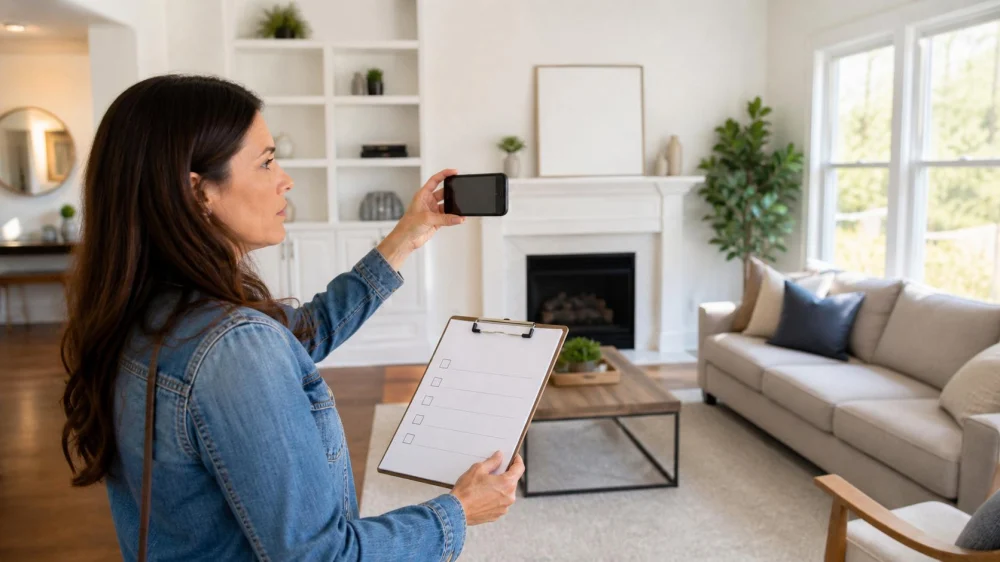
Use one repeatable note sheet for every home tour. Record five essentials first: layout, condition questions, natural light, storage, and location fit. In each room, write one fact, one reaction, and one follow-up question. Add labeled photos only when permitted. Finish with a short summary before visiting the next property.
A home-tour note system is a consistent way to capture observable details and unanswered questions while a property is fresh in your mind. Its purpose is not to replace inspections or documents; it helps you remember what you saw and compare homes using the same criteria.

Prism at Park Avenue South Apartments / prism at park avenue south apartments
New YorkNew York CountyNew York
50 E 28th St, New York, NY 10016, USA
Build a simple scorecard
Prepare the scorecard before the tour so attractive décor or one awkward feature does not take over your judgment. Keep it short enough to use while walking. Choose criteria based on your actual daily life, not a generic idea of the perfect home.
- Must work: bedroom count, accessibility, essential workspace, commute or transportation fit, and any nonnegotiable layout need.
- Prefer: outdoor space, kitchen arrangement, storage style, view, or room orientation.
- Can change: paint, removable fixtures, furniture placement, and other cosmetic details.
- Needs verification: ages of systems, permits, boundaries, recurring costs, included items, and condition concerns.
Use a small rating scale, such as “works,” “uncertain,” and “does not work.” A precise-looking ten-point score often hides uncertainty. Add a short reason beside each rating so the number or label still makes sense later.

West 130 / 130 west hempstead apartments
West HempsteadNassau CountyNew York
130 Hempstead Ave, West Hempstead, NY 11552, USA
Use the same room loop
Walk through each property in the same order when possible. Start with the overall flow, then repeat a quick loop in every important space.
- Pause at the entrance. Note how rooms connect and whether the route fits your household’s routines.
- Look up and down. Observe ceilings, walls, floors, transitions, vents, and visible signs that deserve a professional look.
- Check usable space. Consider door swing, furniture placement, outlets, storage access, and walking clearance.
- Notice light and sound. Record the time, weather, window direction if known, and obvious indoor or outdoor noise.
- Write one question. If you cannot verify something during the tour, mark it for documents, the agent, or an appropriate professional.
Do not test, move, open, or operate anything the seller or showing instructions place off limits. A showing is a chance to observe the property respectfully, not to perform an inspection.
Separate facts from reactions
Use two columns. In the first, record observable facts: “laundry area is upstairs,” “no pantry cabinet visible,” or “afternoon traffic audible from the front room.” In the second, record reactions: “layout feels easy,” “room seems dark,” or “street feels busier than preferred.”
This separation matters because reactions are useful but can change. A beautifully furnished room may feel larger than it is, while an empty room may feel cold even if its dimensions work. Conversely, an uneasy reaction can point to a real daily-life mismatch that deserves investigation.
Questions worth carrying forward
- Which features are included with the property?
- Which visible changes were recent, and are records available?
- What could not be accessed or viewed during the tour?
- Which concerns require a qualified inspector or specialist?
- Which neighborhood or travel assumptions still need an in-person check?
Take useful photos
Ask whether photography is allowed. If it is, take fewer, more useful images rather than a continuous stream. Start each property with a neutral identifier that does not expose private information, then photograph rooms in a consistent order.
- Capture the whole room before close details so you remember context.
- Photograph a question, not just an attractive feature.
- Do not include family photos, documents, security details, medicine, or other personal items when avoidable.
- Do not post showing photos publicly without permission.
- Add a short private label immediately after the tour so properties do not blur together.
Photos may distort scale and color. Use them as memory aids, not proof of dimensions, boundaries, condition, or performance.
Compare homes afterward
Before starting the car or opening another listing, spend five minutes on a closing summary:
- Three things that worked well.
- Three concerns or unknowns.
- One feature that might be expensive, difficult, or impossible for you to change.
- One reason the home fits—or does not fit—your ordinary week.
- A decision: reject, hold for comparison, or investigate further.
Compare only the strongest candidates side by side. Review the same categories, then return to source documents and professional advice for material facts. A second visit can focus on unresolved daily-life questions instead of recreating the first tour.
Important notes and limitations
This guide provides general home-search organization for buyers in the United States. It is not an inspection, appraisal, legal review, financial analysis, or recommendation to buy a property. Practices, documents, and obligations vary by location and transaction.
Evidence note: The method relies on a broad decision-making principle: consistent observations are easier to compare than unstructured impressions. Your notes cannot confirm concealed conditions, code compliance, title, boundaries, future costs, or the accuracy of a listing.
When a concern involves structure, moisture, electrical or fuel systems, environmental hazards, safety, boundaries, permits, contracts, or affordability, pause and seek the appropriate qualified professional. Do not treat a seller’s décor, a listing description, or a casual visual check as verification.
Frequently asked questions
Should I use paper or an app?
Use whichever you can operate quickly without missing the room. Paper is simple and does not depend on signal or battery. A digital form is easier to duplicate and compare. The consistency of the questions matters more than the format.
How many criteria should I score?
Start with five to eight categories tied to daily life. If the form takes most of the tour to complete, it is too long. Keep detailed technical questions in a separate follow-up list.
Should I measure rooms during a first tour?
Ask what is permitted and use published dimensions only as preliminary information. For a critical fit, verify the measurement through an appropriate method before making a decision.
What if two homes receive the same score?
Compare the nonnegotiable items, the size of the unknowns, and which features are hard to change. A tie can also mean you need more information rather than a more complicated scoring formula.
Next steps
- Choose five to eight criteria based on your household’s real routines.
- Create one reusable scorecard with fact, reaction, and follow-up fields.
- Use the same room loop and photo order at every permitted tour.
- Write the five-minute closing summary before the next property.
- Send material unknowns to the right document source or qualified professional.
The best home-tour notes do not try to capture everything. They preserve the few details that affect your decision, distinguish what you observed from what you assumed, and show exactly what must be verified next.






 Cobroke Realty4.0 (15 reviews)
 EZ NYC Realty5.0 (20 reviews)
 Victory One4.0 (14 reviews)
 77 Charlton4.0 (18 reviews)
 Inline Realty Inc.0.0 (0 reviews)
 Gantry0.0 (0 reviews)
 Understanding Appraiser Roles in Determining Home Value for Homeowners
 How to Market Your Home Effectively: Tips and Strategies for Sellers
 Tips for Efficient Rental Property Management
 Is It a Buyer’s Market in 2025? Analyzing Current Real Estate Trends
 How to Avoid Overbuilding When Renovating
 The Benefits of Pre-Approval for a Mortgage